

Quick Links

The University of Lancashire’s new hub for creative youngsters ready to welcome its first visitors.

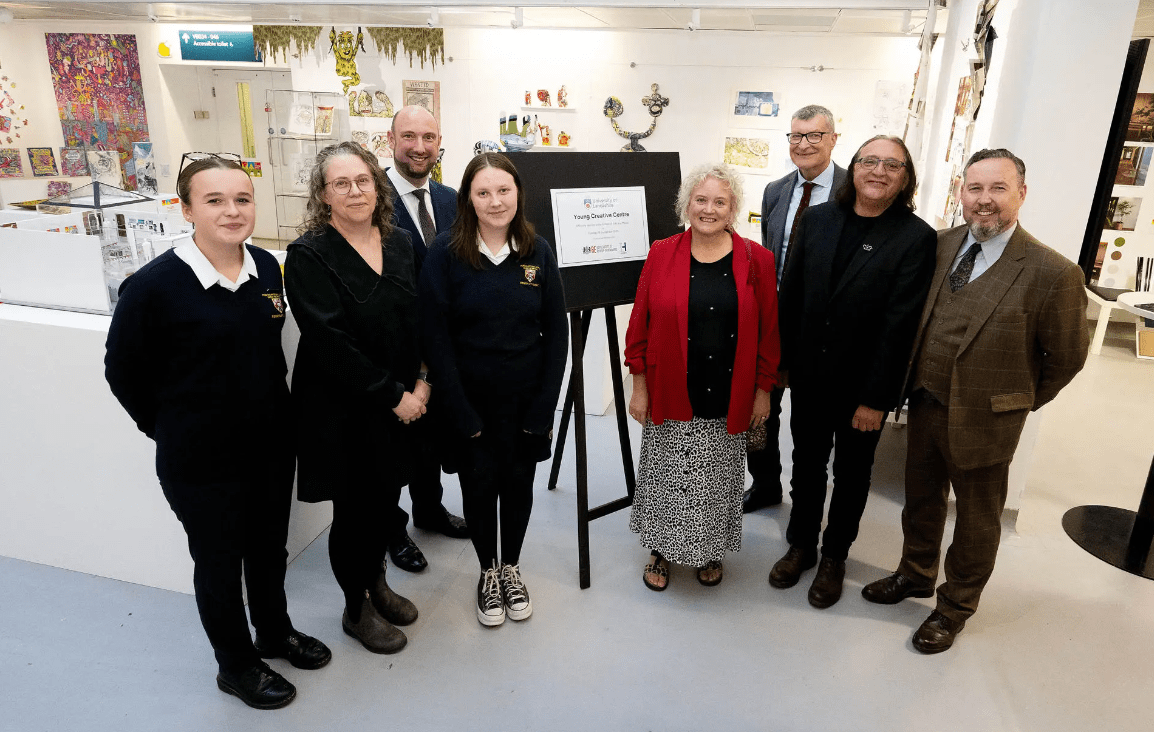
The University of Lancashire’s (previously University of Central Lancashire) Young Creative Centre (YCC) has officially opened its doors ready to welcome artistic youngsters from across Lancashire.

The new centre will provide creative based workshops for secondary school and further education institutions, using specialised equipment and drawing on expertise from the University’s School of Arts and Media.

It will work in partnership with The Harris Museum & Art Gallery, as the lead cultural hub of Preston and the Royal Society of Painter-Printmakers will be an esteemed national partner. 

The centre will help promote creative subjects and nurture local talent in Lancashire and beyond by supporting schools and post-16 providers in these areas.

Workshops will teach skills in subjects including printmaking, fashion, media literacy, animation and illustration and publishing.

The new initiative is based on the Young Scientist Centre (YSC) model which the University launched in 2015 in partnership with the Royal Institution. It has reached more than 18,000 young people over the last decade with its STEM workshops.

Launching the YCC, University of Lancashire’s Vice-Chancellor, Professor Graham Baldwin said: “The creative industries add £124 billion to the UK economy and they are a key sector that will help drive growth in the coming years. We want to inspire the next generation of talent to take up these subjects so we have the skilled workforce needed for the UK to continue to lead in this area.”

Lily T from Penwortham Girls’ High School, attended the centre’s official opening. She said: “It’s great to see some of the activities that we can take part in during the workshops and learn more about the study and career options an interest in creative subjects can lead to.”

Fellow Penwortham Girls’ student, Helena M added: “Attending workshops at the Young Creative Centre would boost my confidence in seeing a future in the arts as a possible career not just a hobby. I’m most excited about developing my digital media and upcycling skills.”

Head of Art and Photography at Penwortham Girls’, Mrs Mitchell added: “The Young Creative Centre will provide many opportunities for creative students to build on what they learn at school and show them how these skills can be applied in the wider world.  It also exposes them to specialist skills and facilities that aren’t available in schools.”

Alongside Professor Baldwin, the YCC was officially opened by Professor Peter Lloyd, Dean of the School of Arts and Media, Mayor of Preston, Councillor Sue Whittam, Councillor Anna Hindle and President of the Royal Society of Painter-Printmakers, Professor David Ferry PRE.

Schools and other education providers can email the YCC on to book a series of workshops for the second half term, beginning 3rd November.

More information is available on the YCC website.  

Supporting Your Child’s Maths Success with Method Maths

The Mathematics department is always looking for effective ways to support our students’ learning, especially as they prepare for their GCSEs. That’s why we’re using Method Maths as a key platform for Year 10 and Year 11 Maths homework and your support at home can make a big difference.

What is Method Maths?

Method Maths is an online tool designed to help students prepare for their GCSE Maths exams. It provides real past-paper style questions that help build exam skills, confidence, and strong maths foundations.

https://www.methodmaths.com/login.html

How Does It Help Your Child?

✔️ Exam Practice That Feels Real

Your child can practise with realistic, interactive exam papers that look and feel like the real thing.

✔️ Instant Feedback

They’ll receive automatic marking and helpful feedback so they can learn from mistakes and improve.

✔️ Focus on Working Out, Not Just Answers

The platform encourages students to show their full working; exactly what examiners want to see.

✔️ Homework You Can Trust

Every task is set by your child’s Maths teacher and is directly linked to their classroom learning.

✔️ Easy to Access

It works on most devices – no special software needed. Just log in and start learning.

How You Can Help:

  • Encourage regular use: Ask your child when their homework is due and make sure they log into Method Maths regularly.
  • Take an interest: Have a quick look at the questions they’re working on or ask them to show you how the platform works.
  • Celebrate progress: Small wins matter! Recognising their effort builds confidence and motivation.

Let’s Work Together

By using Method Maths consistently, students build key skills, improve their problem-solving and become more confident heading into their exams. It’s a simple but powerful way to support learning at home.

Thank you for your continued support. Together, we can help your child achieve their best in Maths!

Warm regards,

Mr. Cheal

Assistant Head of Mathematics

Year 8 Curriculum: The Pendle Witch Trials and Meg Shelton

Lancashire’s history offers students a unique window into the past, including one of its most infamous episodes: the Pendle Witch Trials of 1612. These trials remain a significant part of the county’s heritage, providing insight into 17th-century society, beliefs and justice.

In addition to the trials, students can explore the story of Meg Shelton, sometimes known as the “Flyde Hag,” whose legend survives in Preston. According to local folklore, she was buried face down, or possibly even head first, after reportedly escaping her grave several times in St Anne’s Churchyard, Woodplumpton. Historian, Dave Pearce notes that these tales, handed down as folk stories, reflect the fears and imaginations of the time.

Students and families can learn more about Meg Shelton by following this BBC link: Legend of shape-shifting witch ‘buried head first’.

By examining both historical records and local legends, students gain a richer understanding of Lancashire’s past and the stories that have shaped its cultural identity.

Mr Herbert,

Curriculum Leader for History

Black History Month

Next week marks the start of Black History Month, an annual opportunity to recognise and learn about the history, achievements and contributions of Black people in Britain. Established in the UK in 1987, the month provides schools and communities with the chance to explore important themes in history, culture and society.

A number of events will be taking place in Lancashire to mark the occasion. Details are listed below, with sources for further information:

  • Celebrating Excellence – Black Artisans Exhibition. An exhibition curated by Creative Lancashire, showcasing the work of Black artisans across a range of craft disciplines. Creative Lancashirewww.creativelancashire.org
  • Regional Listings of Events. The official Black History Month UK site provides information about performances, talks and creative events taking place across Lancashire and the wider North West during October. Black History Month UKwww.blackhistorymonth.org.uk
  • Preston Black History Group Programme. Preston Black History Group will be running community events, educational talks and exhibitions connected with Black History Month. Preston Black History Groupwww.prestonblackhistorygroup.org.uk

Mr Herbert,

Curriculum Leader for History

PGHS Archive Club

Since the school first opened its doors in 1954, a wealth of documents, photographs and memorabilia has been gathered. However, much of this valuable material remains uncatalogued and in need of proper organisation. Archive Club has been established to address this and to ensure that the history of our school is preserved with the care it deserves.

The club offers students of all year groups the opportunity to play an active role in conserving the school’s heritage. Members will learn how to catalogue and handle archival material, contribute to the safeguarding of fragile records and help make the collection accessible for future generations.

Beyond organisation, Archive Club seeks to celebrate the past. Students will contribute to displays, newsletter features and other projects designed to showcase the remarkable people, events and traditions that have shaped the school over the decades.

We would also welcome contributions from former pupils. Documents, photographs and items such as old uniforms can offer invaluable insights into the life of the school and we would be delighted to receive any items that alumni may be willing to share.

Archive Club meets every Tuesday lunchtime in the library. All students are warmly invited to come along, gain new skills and take part in preserving and celebrating the story of our school.

Mr Herbert, Curriculum Leader for History

Come to Geography Club

This term we will be running the World Guesser League in room 11 each Monday Lunchtime. If you have not heard of it, this is a web based game where you must take your best guess about where in the world a randomly generated Google Street View is. You need to look for clues in the landscape like road signs, the language used, the weather and the famous landmarks. Look at this easy-peasy example below; would you know where to drop your pin on the world map for this place? The closer you guess, the more points you get. We all play the same game and then your score is recorded. There are spot prizes each week and a league table with year group winners being announced at the end of term. Come and join in! Monday lunchtime in Room 11 – games start at 12:45pm sharp; don’t be late!

Mr Bowles, Curriculum Leader for Geography

Key Stage 4 English: Autumn Term Curriculum

We’re excited to share what our Year 10 and Year 11 students will be covering in English this Autumn term. Both year groups have a busy, challenging and rewarding term ahead as they deepen their skills in English Language and English Literature.

Year 10

  • English Language: Students begin the year by focusing on fiction, exploring how writers use language and structure to create impact on their readers. This unit is a great opportunity for students to sharpen their analytical skills and practise their own creative writing.
  • English Literature: The theme for the term is family. Students will study a range of poems on this topic before moving on to an in-depth exploration of the modern classic Blood Brothers. We are especially looking forward to the Blood Brothers theatre trip to The Lowry later in the term – over 100 students have signed up and it promises to be a fantastic opportunity to see the play brought to life on stage.

Year 11

  • English Language: Year 11 students are revisiting fiction and exploring how language and structure can be used to shape meaning and influence readers. Alongside this, they are preparing and delivering speeches as part of their Non-Exam Assessment (NEA). This extended homework project is due before half term and it is an important part of their spoken language study.
  • English Literature: Students are undertaking an in-depth study of Shakespeare’s Romeo and Juliet while also developing their skills in analysing unseen poetry. To support this, the English department have designed an interleaved revision programme for English Literature. Each weekly homework task is a vital part of this programme, helping students revisit key texts and themes in preparation for their final exams.

It’s a packed term for our Key Stage 4 students and we are very proud of their hard work and dedication. Please do encourage your child to keep on top of their weekly revision homework – it really does make a difference when it comes to building confidence for those all-important exams.

How You Can Help at Home

Parents play a huge role in supporting students’ progress and there are lots of simple ways you can get involved:

  • Talk about the texts: Ask your child to explain what’s happening in Blood Brothers or Romeo and Juliet – teaching someone else is a brilliant way to deepen understanding.
  • Listen to their speeches: Year 11 students will be preparing their NEA speeches. Please encourage them to practise aloud at home and give them feedback on clarity, tone and confidence.
  • Quiz them on key quotes: For both year groups, knowing key quotations is essential. Try quizzing your child on short quotes or asking them how a quote links to a character or theme.
  • Encourage regular homework: Remind your child that each weekly literature homework is part of a carefully planned revision programme – little and often makes exam preparation much easier.

Mrs Snowdon

Curriculum Leader for English

What’s Happening in Key Stage 3 English This Autumn?

We’ve got an exciting Autumn term ahead in English, with each year group exploring a different theme that will get them reading, thinking, and talking about big ideas. Here’s a glimpse of what your child will be working on:

Year 7: Myths and Monsters

Our new Year 7s are diving straight into the world of Myths and Monsters. From ancient heroes to fearsome creatures, they’ll explore stories that have captured imaginations for centuries. Alongside these fantastic tales, students will also look at the history of the English language, discovering how our words and stories have changed and grown over time. It’s the perfect way to spark curiosity and set the tone for their English journey at secondary school.

Year 8: Coming of Age

In Year 8, students are exploring the theme of Coming of Age. Through novels, nonfiction, and poetry, they’ll be looking at what it means to grow up; the challenges, the changes and the milestones along the way. These texts often reflect the very experiences our young people are beginning to face, so it’s a great opportunity for them to see their own journeys mirrored in literature and to develop empathy for others’ experiences too.

Year 9: Crime

Year 9 are tackling a gripping theme of Crime. They’ll get stuck into crime fiction and poetry, exploring how writers build tension, mystery and suspense. However, it’s not all about fiction – students will also look at how crime is reported in newspapers and other nonfiction sources, thinking about how language can influence the way we see the world. It’s a unit that really gets them debating, questioning and sharpening their critical thinking skills.

Across all of Key Stage 3, students will be building their reading, writing and discussion skills but most importantly, we hope they’ll enjoy the stories, ideas and conversations that come out of these exciting topics. Do ask your child what they’re reading or working on – you might be surprised at the discussions it sparks at home!

Mrs Snowdon

Curriculum Leader for English

Young Writers Competition: “I Have a Dream”

This half term, all of our Key Stage 3 students (with the opportunity also open to Key Stage 4) will be taking part in an extended homework project for the annual Young Writers Competition. The theme this year is “I Have a Dream”, which gives students the chance to be creative, imaginative and ambitious in their writing.

The deadline for all entries is Friday 20th October.

Last year we enjoyed fantastic success, with a number of our students’ work selected for publication in the Young Writers Anthologies. We are excited to see the talent and creativity our students will showcase again this year.

  • Lancashire Socio-economic Equality Badge
  • SMART
  • School Mental Health Award
  • Ofsted - Outstanding Provider
  • International School Award
  • FFT National Attendance Award
  • Behaviour Quality Mark
  • Lancashire Socio-economic Equality Badge
  • SMART
  • School Mental Health Award
  • Ofsted - Outstanding Provider
  • International School Award
  • FFT National Attendance Award
  • Behaviour Quality Mark